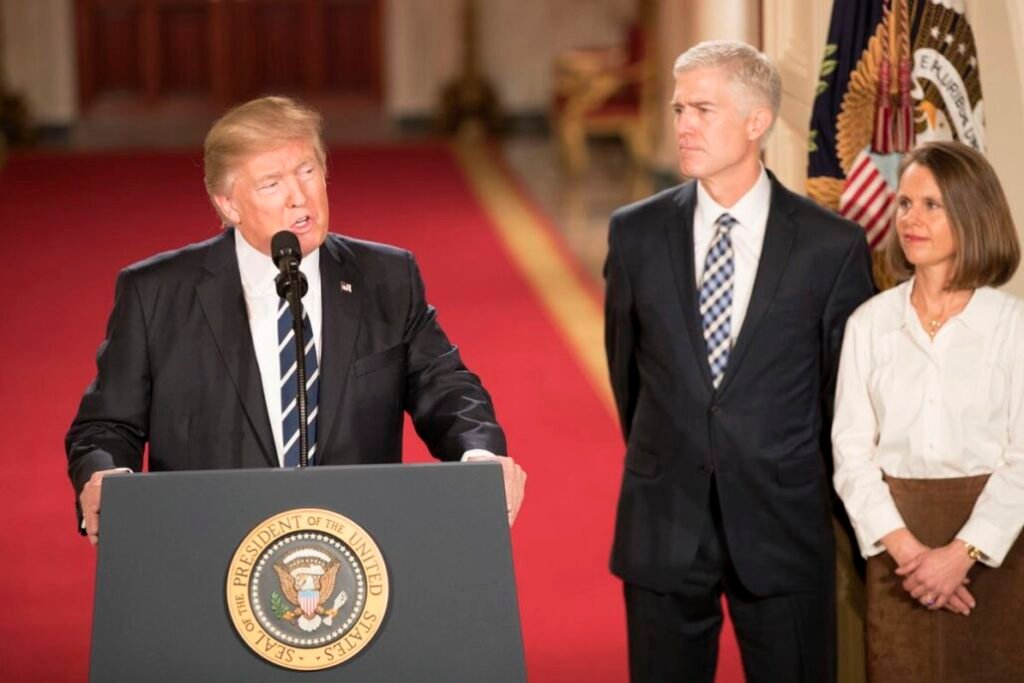
Washington D.C. — U.S. President Donald Trump has announced plans to resume nuclear weapons testing, citing the need to maintain the country’s strategic edge. The announcement comes shortly after Russia conducted tests of its 9M730 Burevestnik nuclear-powered cruise missile and the Poseidon nuclear-capable torpedo, which are part of Moscow’s next-generation nuclear forces.
Trump posted on Truth Social that the United States has “more Nuclear Weapons than any other country,” achieved through modernization and upgrades during his first term in office. He added that, due to other nations’ testing programs, he has instructed the Department of War to start testing U.S. nuclear weapons on an equal basis immediately.
According to the Arms Control Association, the United States currently has about 5,225 nuclear warheads, while Russia has roughly 5,580 and China holds around 600. The U.S. maintains the largest number of deployed warheads, but Russia has a slightly larger total stockpile. Analysts say this difference continues to shape strategic planning for both countries.
The announcement comes less than 100 days before the New Strategic Arms Reduction Treaty (New START) is set to expire in February 2026. Signed in 2010, New START is the last major nuclear arms control agreement between the United States and Russia. It limits each country to 1,550 deployed strategic warheads and 700 delivery systems. Although Russia suspended participation in 2023 due to the war in Ukraine, it committed to adhering to the limits. If the treaty is not extended, both nations could expand their arsenals without legal restrictions, raising concerns about a new arms race.
The United States last conducted a full-scale nuclear test on September 23, 1992, at an underground site in Nevada. Known as Divider, this was the nation’s 1,054th nuclear detonation, overseen by the Los Alamos National Laboratory, which played a key role in developing the first atomic bomb during the Manhattan Project. The U.S. remains the only country to have used nuclear weapons in combat, with attacks on Hiroshima and Nagasaki in 1945. Since then, the U.S. has relied on computer simulations and subcritical tests to maintain the safety and reliability of its arsenal without conducting live detonations.
Experts say resuming nuclear testing could have serious global implications. It could prompt Russia and China to conduct similar tests, increasing tensions and sparking a new phase of strategic competition. Other nuclear-armed countries, including India, Pakistan, and North Korea, could also feel less pressure to limit their programs, potentially accelerating nuclear development worldwide.
The decision would mark a significant shift in U.S. policy, ending decades of restraint and possibly destabilizing the balance that has prevented large-scale nuclear escalation since the early 1990s. Strategic analysts warn that renewed testing could trigger a chain reaction, increasing global uncertainty and undermining nonproliferation efforts that have guided international nuclear policy for decades.
So far, neither the Pentagon nor other U.S. defense agencies have confirmed any preparations for new nuclear tests. The international community is watching closely, as any action could reshape the strategic landscape, influence arms control negotiations, and affect global security for years to come.