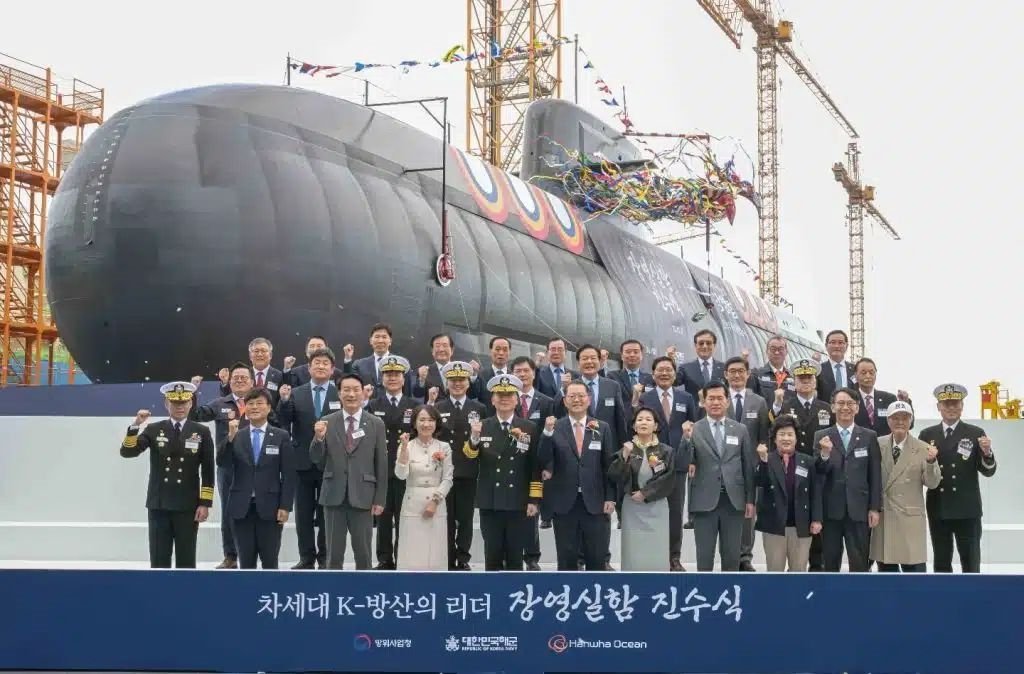
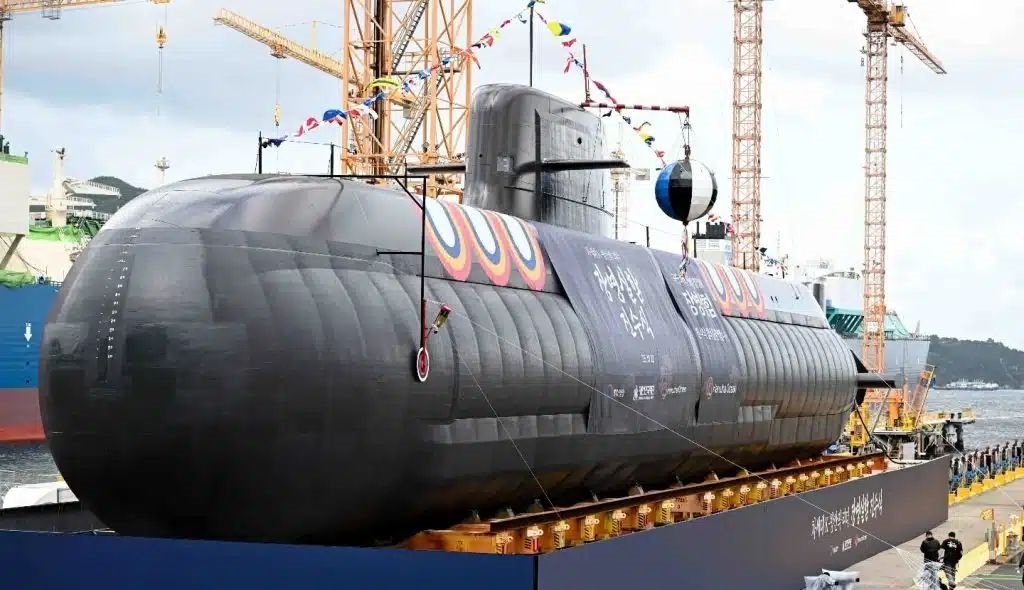
South Korea has taken a giant stride in regional maritime security by officially launching its largest and most advanced conventional submarine, the ROKS Jang Yeong-sil (SS-087), which was domestically designed and constructed. As the lead vessel of the KSS-III (Jangbogo-III) program’s second phase, Batch II, this platform represents the pinnacle of South Korea’s capacity to independently build technologically sophisticated submarines.
Launched during a ceremony at Hanwha Ocean’s Geoje shipyard on October 22, 2025 , the Jang Yeong-sil features a significantly enlarged and modernized design compared to the preceding Batch I Dosan Ahn Changho-class submarines.
Technological Leap: Lithium-Ion Batteries and Expanded VLS
The Jang Yeong-sil has an estimated surface displacement of around 3,600 tons and a submerged displacement of about 4,000 tons. At 89 meters in length, the vessel is not only larger but also technologically more advanced. Two key innovations set this submarine apart from its predecessor.
1.Domestic Lithium-Ion Batteries (LITB): A Stealth Revolution
The most notable feature of Batch II is the integration of domestically developed Lithium-Ion Battery systems for the first time in a submarine. These batteries provide a much higher energy density than traditional lead-acid batteries. Consequently, the Jang Yeong-sil can remain submerged and hidden up to three times longer than the Batch I, while sustaining high-speed maneuvers for extended periods. This significantly extended operational window is globally recognized as among the longest for non-nuclear powered submarines.
2.Enhanced Strategic Strike Power (10 VLS Cells)
The submarine’s hull has been extended by 6 meters to accommodate ten (10) Vertical Launch System (VLS) cells, up from the six (6) VLS cells standard on Batch I. This 66% capacity increase solidifies the platform’s primary mission of strategic deterrence. These VLS are designed to deploy the Korean-made Hyunmoo-IV-4 Submarine-Launched Ballistic Missiles (SLBM) and provide South Korea with a reliable land-attack retaliation capability.
Anchor of Deterrence: Integration into the Three-Axis System
Designed as a direct response to North Korea’s nuclear and missile programs, the Jang Yeong-sil assumes a critical role in the maritime component of South Korea’s Three-Axis Deterrence System (Kill Chain, KAMD, KMPR).
- Kill Chain (Preemptive Strike): The submarine’s extended stealth and endurance make it an indispensable platform for guaranteeing the detection of key enemy facilities and ensuring a preemptive strike.
- KMPR (Retaliation): With its 10-SLBM capacity, the submarine guarantees a survivable “second strike” capability, ensuring conventional retaliation even if surface command and control centers are compromised.
Localization Success and Future Outlook
The development of the Jang Yeong-sil is a major triumph for South Korea’s indigenous defense industry. The localization rate for the submarine is projected to be over 80% in Batch II, up from 76% in Batch I. This high rate strengthens the national industrial base and enhances supply chain resilience by reducing reliance on foreign components.
The naming of the vessel after Jang Yeong-sil, the renowned Joseon Dynasty scientist known for his innovations in automation , symbolically links the platform to Korea’s legacy of scientific excellence.
Construction, which began in March 2023 , will be followed by extensive harbor and sea trials until late 2027, when the vessel is slated for formal delivery to the ROK Navy. The other two submarines of the Batch II series are currently under construction. The success of this program further cements South Korea’s position as a potent player in the global defense export market.