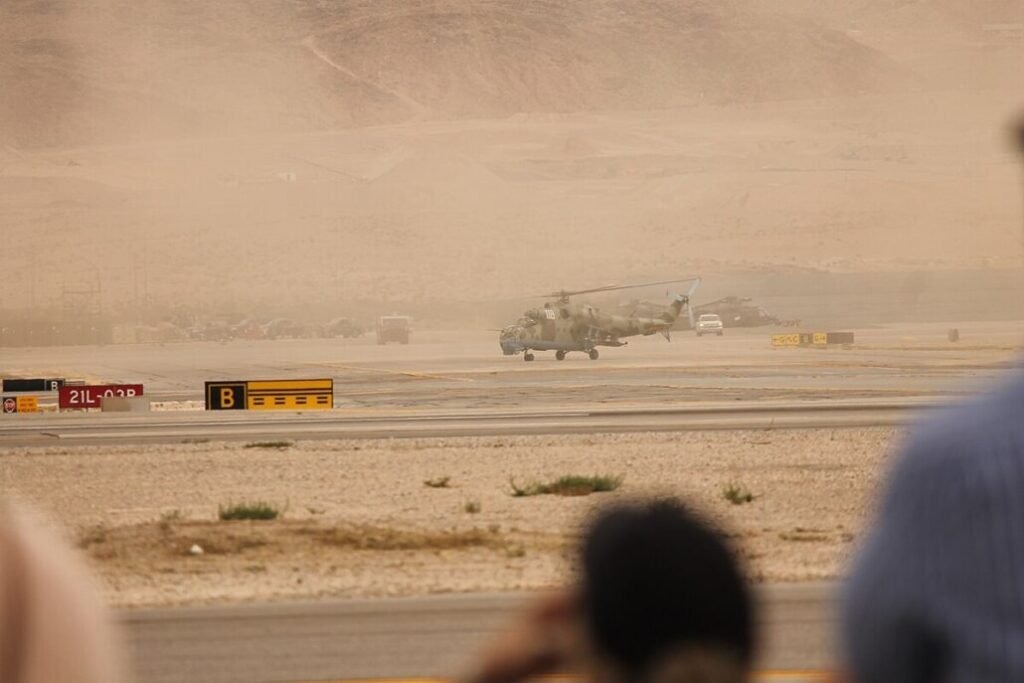
On Monday, 27 October 2025, at around 13:00 local time, a Mi-24D helicopter of the Ivory Coast Armed Forces (FACI) experienced a technical failure during takeoff at Korhogo airport in the northern part of the country. The helicopter had just begun its ascent when the crew, acting quickly and professionally, managed to perform an emergency landing. No casualties were reported among the crew or airport personnel. The FACI General Staff highlighted that the crew’s skill and composure prevented a potential tragedy. Immediately following the incident, a technical team was dispatched to assess the damage and conduct a thorough investigation to determine the exact cause of the failure.
The Mi-24D is a Russian-made attack and close air support helicopter and represents a critical component of FACI’s operational capabilities. Valued at approximately $12.5 million, the platform is known for its high maneuverability, armored fuselage, and heavy weapons carrying capacity. Equipped with cannons, rockets, and machine guns, it can effectively conduct both attack and reconnaissance missions. FACI deploys these helicopters particularly for rapid response and reconnaissance missions against Islamist militant groups, such as members of Jama’at Nasr al-Islam wal Muslimin (JNIM), operating along the northern borders. Although adapted to the challenging operational conditions of tropical and arid border regions, these helicopters form a fragile fleet due to aging airframes and maintenance deficiencies.
Since 2004, FACI has faced significant losses in its Mi-24 and Mi-35 helicopter fleet due to operational attrition and technical failures. During clashes with French peacekeeping forces in 2004, at least five Mi-24s were destroyed. In 2019 and 2020, incidents in Katiola and Abidjan involving ground collisions and emergency landings resulted in damage to additional helicopters. In 2021, a reconnaissance accident near Ferkessedougou in the north claimed the lives of five crew members. These incidents highlight repeated technical risks caused by FACI’s logistical, maintenance, and training shortcomings, revealing that the fleet’s operational readiness is not sustainable.
Following each loss, Ivory Coast conducted regular acquisitions from Russia to fill gaps in its Mi-series helicopter fleet. However, high costs, logistical challenges, and long turnaround times have placed the helicopters in a continuous emergency replacement cycle. This approach prioritizes short-term inventory restoration over sustainable operational capability, creating a costly and repetitive cycle. Experts emphasize that ensuring long-term operational reliability requires strengthening MRO infrastructure, investing in pilot and technician training, and pursuing fleet diversification.
The Korhogo Mi-24D incident once again exposes systemic weaknesses in FACI’s logistics and maintenance structures. While the crew’s professional response prevented a tragedy, the fleet’s fragility and limited operational margin remain a concern. FACI must develop comprehensive strategies that ensure the sustainability of existing assets rather than solely focusing on acquiring new helicopters. Experts stress that transparent procurement processes, certified MRO facilities, and human resource development programs are key to enhancing Ivory Coast’s security capabilities in the Sahel region.