
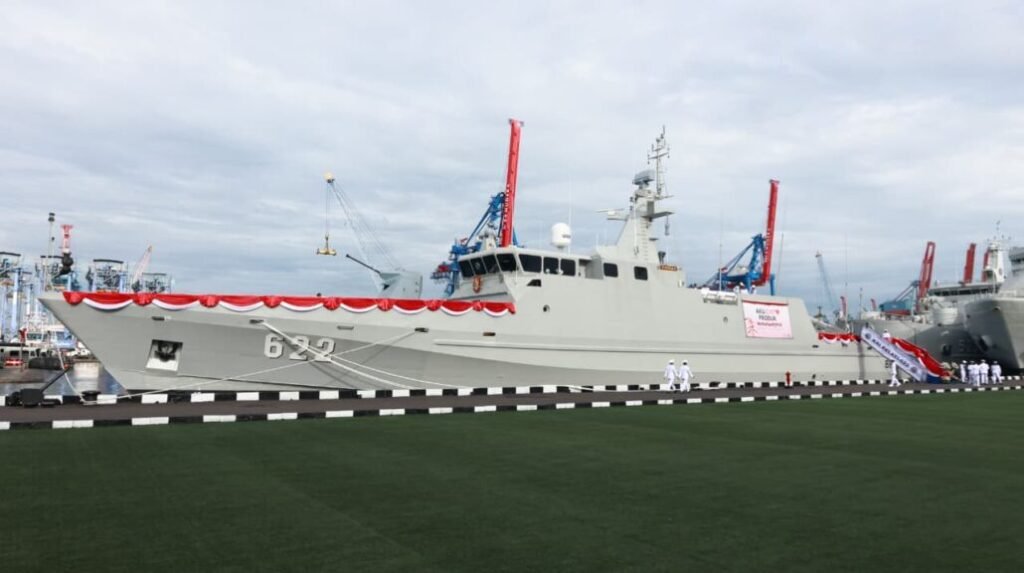
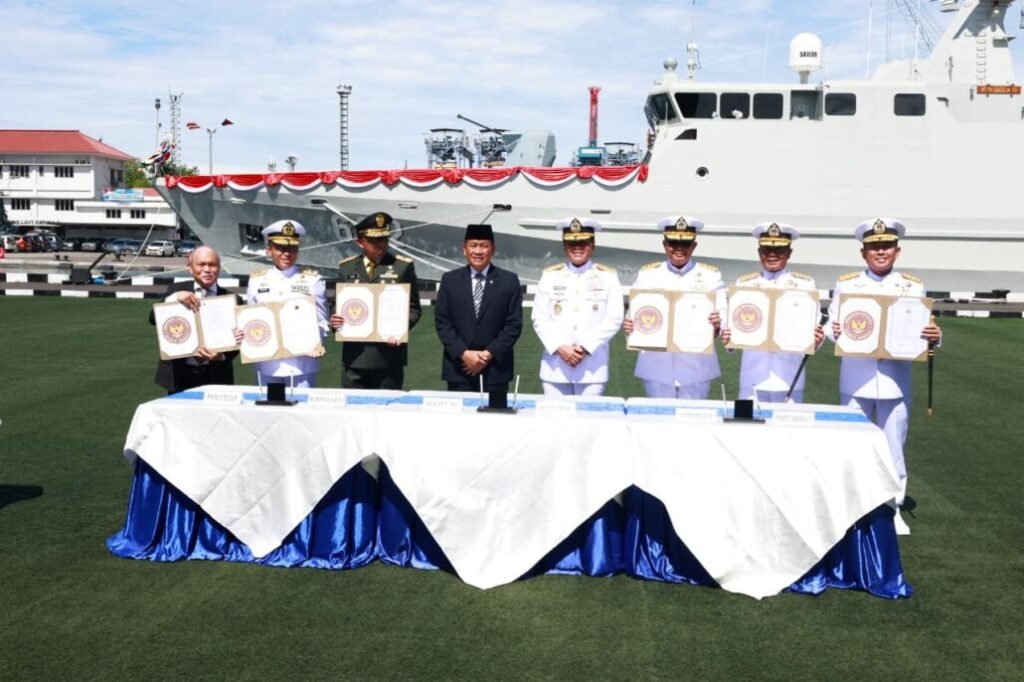
The Indonesian Navy (TNI AL) officially commissioned the 60-meter Fast Attack Craft-Missile (FACM), KRI Belati (622), in a ceremony held on October 24th at the Military Sealift Command (KOLINLAMIL) headquarters in North Jakarta. Built domestically, the vessel marks a significant milestone in the country’s naval and industrial development.
Presided over by Navy Chief of Staff Admiral Muhammad Ali, the commissioning underscores KRI Belati‘s role as a key component of the TNI AL’s priority program for modernizing and fulfilling its essential naval weapon systems.
Indonesia’s First Hybrid Warship
The defining feature distinguishing KRI Belati from its predecessors is its propulsion system, making it the first warship in TNI AL service to incorporate a hybrid configuration. Constructed over 34 months by the private domestic shipbuilder PT Tesco Indomaritim , the vessel utilizes a patented system combining conventional propellers and waterjets.
Admiral Ali emphasized the critical operational benefits of this unique system: “This ship is highly fuel-efficient, can operate longer, and is environmentally friendly thanks to its biodiesel capability,” he said.
Jamin Basuki, CEO of PT Tesco Indomaritim, noted that the heavy-duty engine profile contributes significantly to its endurance. The engine can achieve a Time Between Overhaul (TBO) of up to 30,000 operational hours before a major overhaul, quadrupling the standard 9,000 hours typically seen in similar light-duty vessels. This enhanced endurance means the vessel theoretically possesses the range to transit the entire breadth of the Indonesian archipelago, from Sabang to Merauke, without needing to refuel while cruising at loitering speed.
A Leap in Combat Capability Through Turkish Partnership
The entry of KRI Belati into the fleet signals a strategic diversification in the Indonesian Navy’s missile and Command and Control (C2) systems. Its combat capability is built around an integrated Sensor and Weapon Command and Control system (SEWACO), developed through a partnership between Indonesian defense firms and major Turkish companies, including Havelsan, Roketsan, and Aselsan.
The vessel’s primary striking power is provided by four Roketsan Atmaca surface-to-surface missile (SSM) launchers. The adoption of this modern missile system represents a strategic pivot, adding a new, advanced Anti-Surface Warfare (ASuW) capability to the fleet and diversifying missile holdings away from previous reliance on Chinese (C-705) and French (Exocet) systems. For kinetic engagement, the ship is armed with one unit of the Leonardo Marlin 40 RC 40mm cannon and two secondary 20mm cannons.
The critical Command Management System (CMS) is Havelsan’s ADVENT , a network-centric, data-integrated system. Its successful integration and delivery mark Havelsan’s first deployment of the system in the Far Asia region, underscoring the deepening defense technology nexus between Turkey and Indonesia.
Strategic Deployment to Strengthen the Eastern Fleet
Following its commissioning, the new Fast Attack Craft has been assigned to the Third Fleet Command (Koarmada III), based in Sorong, Southwest Papua. Koarmada III is responsible for securing the Eastern Indonesian maritime region, an area Admiral Ali noted “is still lacking in numbers compared to Koarmada I and II” (the Western and Central Fleets).
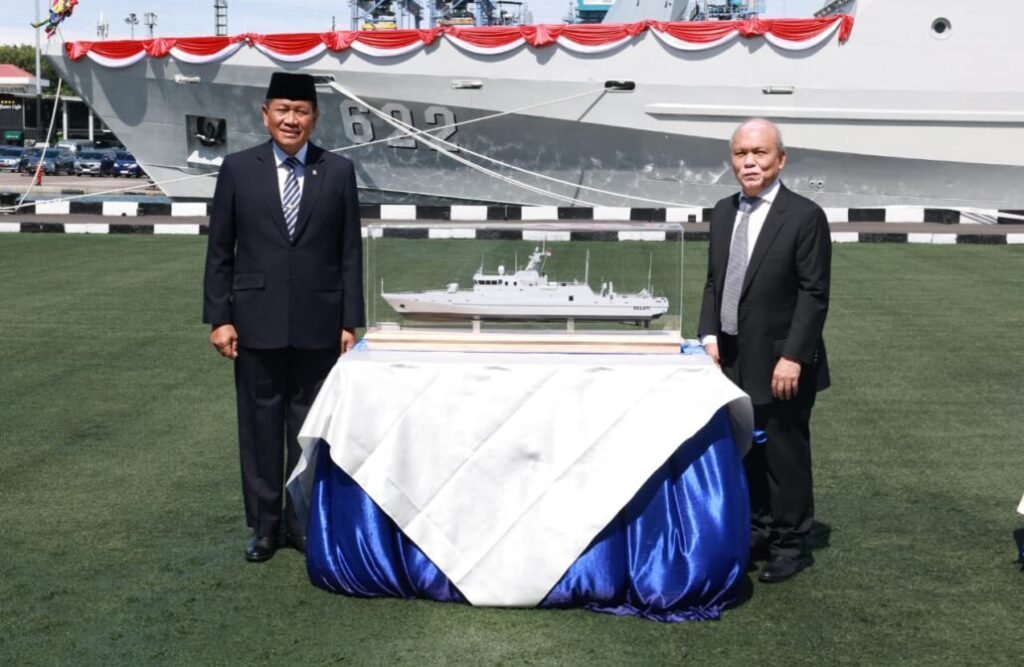
The hybrid propulsion system’s focus on fuel efficiency and extended operational availability makes KRI Belati ideally suited for the logistical challenges of patrolling the vast, remote waters of Eastern Indonesia. The selection of a private shipyard, PT Tesco Indomaritim, for this complex combat platform, validates the growing technical capabilities of Indonesia’s private defense industry and its commitment to increasing the use of domestic products (TKDN) in national defense programs. Admiral Ali confirmed that the TNI AL plans to incorporate similar hybrid propulsion systems into future Fast Attack Crafts to universally enhance fleet efficiency and operational performance.