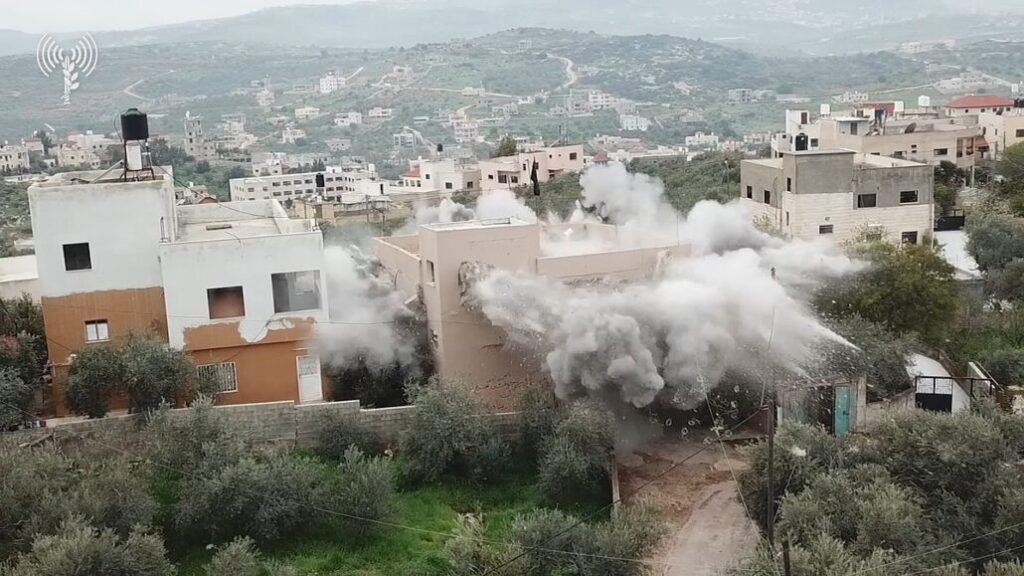
Israeli Prime Minister Benjamin Netanyahu stated on Sunday that the Israeli Air Force dropped 153 tonnes of bombs on the Gaza Strip, despite the existence of a fragile ceasefire framework intended to stabilise the conflict environment. The announcement signals not only a renewed escalation in the Israel–Hamas conflict but also a broader shift in the security architecture of the Eastern Mediterranean, with direct implications for maritime operations, humanitarian corridors, and regional geopolitical alignments.
1. A Ceasefire Undermined
Netanyahu’s public confirmation of large-scale bombardment effectively acknowledges a breach in the post-ceasefire arrangement. The strike signals that Israel is recalibrating the balance between military pressure and diplomatic restraint, prioritising immediate tactical objectives over long-term stability.
Such a visible escalation:
- erodes already-limited trust between negotiating parties,
- complicates mediation efforts led by regional actors such as Egypt and Qatar,
- and increases the probability of a broader confrontation involving non-state actors in Lebanon and beyond.
2. The Strategic Logic Behind a 153-Tonne Strike
The deliberate mention of “153 tonnes” serves a dual purpose: deterrence signalling and domestic posture building. Operationally, such a volume of munitions in a single day suggests:
- saturation strikes on urban infrastructure and suspected tunnel complexes,
- attempts to disrupt Hamas’s operational systems before they can reorganise,
- and a message of sustained Israeli air dominance after months of attrition.
However, this approach increases international scrutiny regarding proportionality and civilian harm, factors that shape diplomatic pressure on both Israel’s allies and adversaries.
3. Maritime Implications: The Gaza Littoral as a Security Flashpoint
Although the bombardment occurred on land, the maritime domain is immediately affected given Gaza’s coastal geography and the Eastern Mediterranean’s dense security ecosystem.
(a) Humanitarian maritime corridors at risk
With airstrikes intensifying, the viability of any proposed seaborne humanitarian delivery mechanism becomes more uncertain.
- Naval escorts may be required.
- Insurance premiums for vessels operating near Gaza’s maritime approaches will rise.
- The risk of misidentification or escalation involving naval units increases.
(b) Increased ISR and naval posturing
Israel traditionally augments major air operations with:
- enhanced naval intelligence, surveillance, and reconnaissance (ISR) along Gaza’s coastline,
- deployment of missile boats and patrol craft,
- and coordination between air and naval targeting cells.
This creates a compressed, high-risk environment for any vessel operating within the regional maritime picture.
(c) Implications for regional actors
Egypt, Türkiye, Greece and Cyprus — all key Eastern Mediterranean maritime stakeholders — must reassess:
- shipping advisories,
- naval readiness levels,
- and contingency planning for spillover scenarios, including refugee outflows or maritime confrontation.
4. A Regional Power Balance Under Strain
The strike further entrenches a geopolitical tension line extending from:
- Southern Lebanon,
- through the Gaza maritime strip,
- to the Sinai Peninsula and the Suez-Levant corridor.
Turkey and Egypt, in particular, will be watching developments closely:
- Türkiye sees the Eastern Mediterranean as both a strategic maritime space and a diplomatic battlefield.
- Egypt, as Gaza’s immediate neighbour, faces direct stability risks and will likely increase its naval surveillance in the Rafah–Arish sector.
Meanwhile, Iran-aligned groups may interpret the strike as an opportunity for asymmetrical action, raising the likelihood of maritime harassment or drone/small-boat incidents in adjacent waters.
5. Broader Implications for Maritime Security and Trade
The Eastern Mediterranean is a critical artery for:
- LNG shipments,
- container traffic,
- and regional cabotage routes.
Any escalation in Gaza historically leads to:
- increased maritime risk assessments,
- heightened naval alertness,
- and, at times, disruptions in port operations or shipping insurance.
This 153-tonne strike, and the political message behind it, will likely trigger a new insurance cycle and raise threat levels across the region’s maritime community.
Conclusion
Israel’s 153-tonne bombardment represents more than a tactical airstrike. It is a strategic message that risks re-escalating the conflict, reshaping diplomatic negotiations, and reverberating across the Eastern Mediterranean maritime domain.
For regional navies, humanitarian planners, and defence analysts, this event underscores a familiar truth of the Levantine theatre:
what happens on the ground in Gaza never stays on land — it inevitably reshapes the sea.