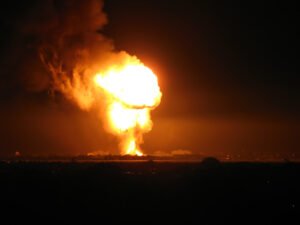
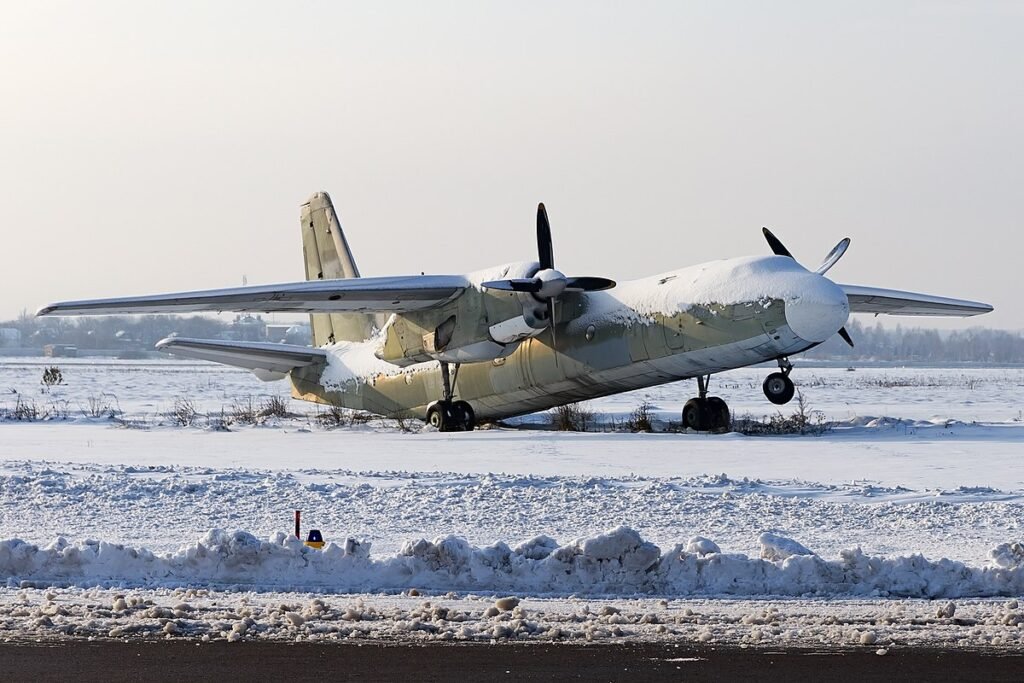
The strike on Russian targets in Crimea was formally confirmed by Ukraine’s Main Intelligence Directorate (HUR/GUR) on December 12, 2025. According to officials, the offensive actions were conducted over December 10 and 11. While the intelligence service did not disclose the exact coordinates of the radar strikes, open source intelligence and Russian military monitoring channels indicated that an An-26 transport aircraft was hit at the Kacha Airfield. This facility functions as a key naval aviation base near the major Russian naval hub of Sevastopol.
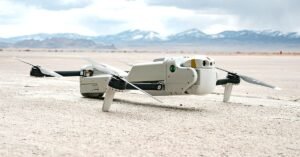
The operation reportedly relied on strike drones, possibly FP2 models as suggested by Russian sources, employed with considerable precision. Ukrainian military intelligence also released footage of the attack. According to the official account, the An-26 crew had already started the engines in preparation for takeoff when the drone struck the left turboprop. Carrying out the strike at this moment increased the likelihood of a total loss because of the heat and fuel present in the running engines. This illustrates the use of timely intelligence, surveillance and reconnaissance methods that identify brief windows of vulnerability at Russian military facilities. Russian occupation-linked channels additionally reported casualties among the crew or airfield personnel, although the exact number was not confirmed.
Responsibility for the operation was attributed to the special forces unit known as “Prymary” or “Ghosts.” Throughout 2025 this unit has maintained a consistent pattern of deep strikes against high value Russian targets inside occupied Crimea. Its actions form part of a broader campaign aimed at degrading Russian air defenses and aviation capabilities, with previous strikes confirmed against a Su-24 bomber, a Be-12 aircraft and several coastal radar systems.
The repeated success of these missions reflects a notable evolution in Ukrainian operational planning. Executing deep strikes against diverse and heavily protected targets requires layered intelligence, potentially including signals, imagery and human sources, combined with precise and rapid execution. The unit’s ability to operate in the Russian controlled rear suggests that Ukrainian forces have developed reliable methods for planning and conducting complex missions that challenge Russian security and counterintelligence structures on the peninsula.
The operation of December 10 and 11, which resulted in the destruction of the An-26 aircraft and the 55Zh6M Nebo M and 64N6E radar systems, highlights this maturing deep strike capability. By hitting both logistical assets and critical components of Russia’s early warning and tactical sensing network at the same time, Ukraine demonstrated a coordinated approach designed to undermine the operational sustainability of Russian forces in Crimea. This pattern points to a broader strategic effort to raise the risks and costs for Russia in maintaining its military presence in the occupied region.