
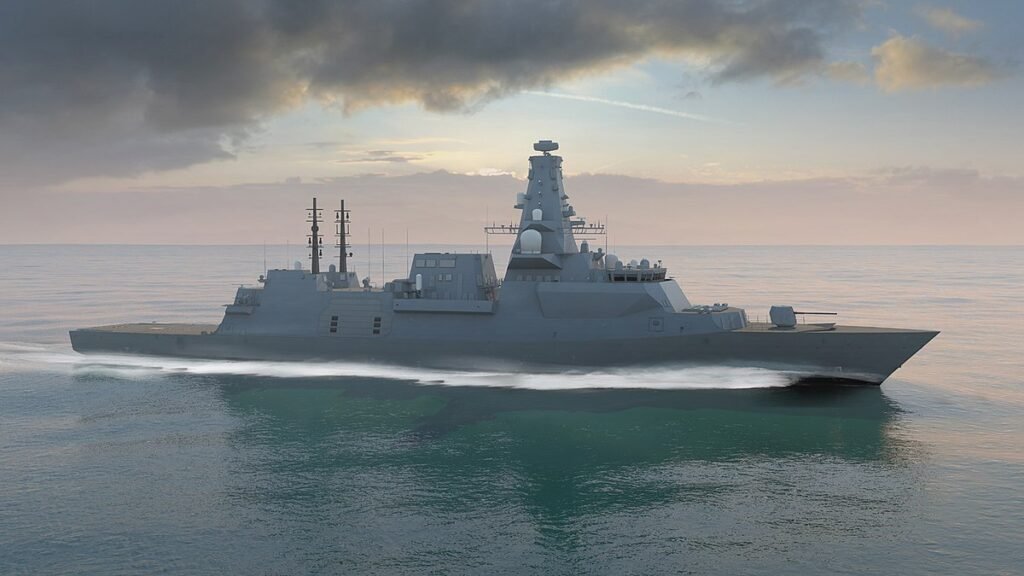
The United Kingdom and Norway have unveiled a landmark defence agreement that will see their navies operate as a unified force in the North Atlantic to counter increasing Russian undersea activity. The “Lunna House Agreement,” announced during Norwegian Prime Minister Jonas Gahr Støre’s visit to RAF Lossiemouth, establishes a combined fleet designed to protect critical infrastructure and monitor submarine movements across one of NATO’s most strategically significant regions.
The agreement comes amid a 30% rise in Russian naval activity around UK waters over the past two years. This includes recent sightings of Russian intelligence-gathering ships such as the research vessel Yantar, detected near the edge of British territorial waters north of Scotland. Both governments argue that growing pressure on vital undersea cables, pipelines, and maritime traffic demands a coordinated, long-term response.
At the core of the deal is an interchangeable fleet of at least 13 British-built Type 26 anti-submarine warfare frigates — eight for the Royal Navy and a minimum of five for the Royal Norwegian Navy. The ships form part of a £10 billion shipbuilding programme signed in September, representing the largest British naval export agreement in history and supporting more than 4,000 high-skilled jobs across the UK.
Named after Lunna House in the Shetland Isles — the wartime headquarters of the Norwegian resistance — the agreement builds on 75 years of British-Norwegian cooperation as founding members of NATO. It also reflects London’s wider effort to reinforce European defence ties through new pacts with Germany and France amid heightened geopolitical instability.
British Prime Minister Keir Starmer said the partnership underscores a shared commitment to countering modern security challenges:
“At this time of profound global instability, as more Russian ships are being detected in our waters, we must work with international partners to protect our national security. This historic agreement with Norway strengthens our ability to protect our borders and the critical infrastructure our nations depend on.”
After the signing ceremony at 10 Downing Street, Defence Secretary John Healey and his Norwegian counterpart Tore O. Sandvik are due to travel to Portsmouth to meet the UK-Norway Maritime Capability Coalition — a joint initiative supporting Ukraine’s naval development through training, equipment, and infrastructure.
Under the agreement, the combined fleet will regularly patrol the Greenland-Iceland-UK (GIUK) gap, a key chokepoint for Russian submarines entering the North Atlantic. The navies will share maintenance facilities, technology, and logistics to ensure rapid, coordinated deployments. Both sides emphasize that the forces will be fully interoperable, capable of operating as a single unit when required.
The Lunna House Agreement also expands joint capabilities beyond warships. The UK will join Norway’s programme to develop offshore support vessels that will serve as motherships for uncrewed mine-hunting and undersea warfare systems — an area NATO is rapidly advancing. The deal deepens cooperation on Sting Ray torpedoes, adopts Norwegian naval strike missiles for the Royal Navy, and institutionalizes year-round Arctic training for Royal Marines.
Defence Secretary Healey described the pact as a decisive step in strengthening northern European security:
“In this new era of threat and with increasing Russian activity in the North Atlantic, our strength comes from hard power and strong alliances. For over 75 years, the UK and Norway have stood shoulder-to-shoulder on NATO’s northern flank. This partnership takes us further, making our nations more secure at home and strong abroad.”
With joint wargaming, industrial collaboration, and leadership within NATO on autonomous maritime systems, the agreement represents one of the most comprehensive bilateral naval partnerships in Europe. Both governments project that the enhanced cooperation will reinforce deterrence, bolster the defence of critical infrastructure, and strengthen long-term maritime security.