The British Army is set to receive a significant boost as the United Kingdom and Germany have signed a major contract for high-tech bridging equipment, marking a key milestone in their defence partnership.
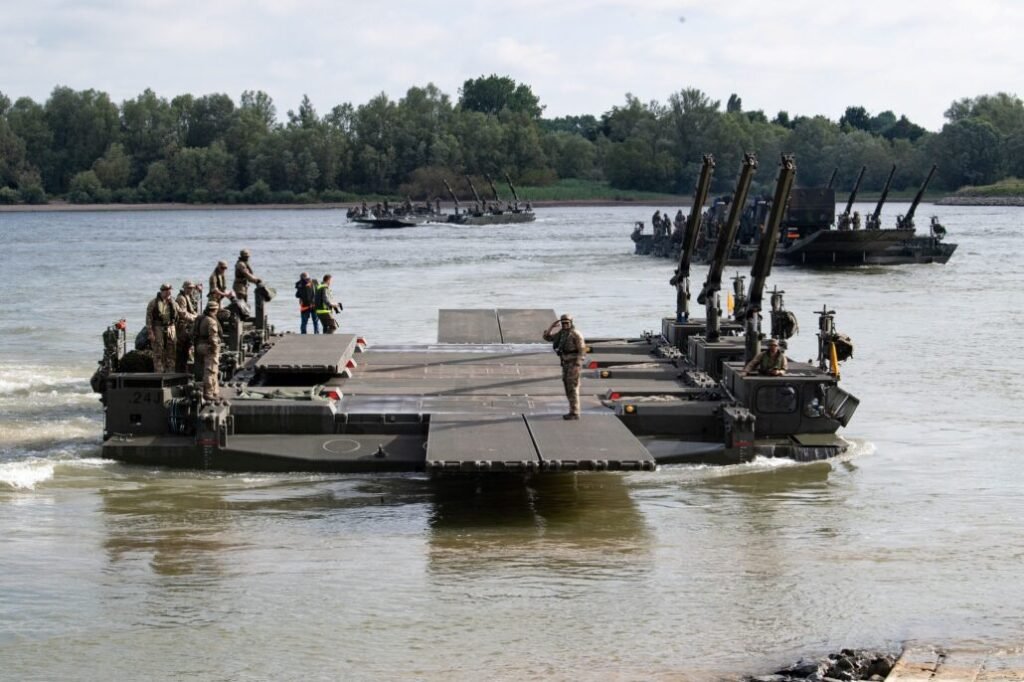
One year after the landmark Trinity House Agreement, the UK is investing £200 million to acquire 36 advanced amphibious bridging vehicles from General Dynamics European Land Systems (GDELS) in Germany. These vehicles will enhance troop mobility and allow heavy equipment, including tanks and artillery, to cross rivers and other water obstacles. Germany will also purchase a number of these units for its own armed forces.
In addition, UK industry will benefit from Germany purchasing the General Support Bridge (GSB) system, produced by KNDS UK in Stockport. This system enables troops to construct a 46-metre bridge – equivalent to five buses – in under 90 minutes and supports all NATO tanks, including the UK’s future Challenger 3. The project sustains 300 UK jobs and underscores defence as a driver of economic growth.
The new M3 EVO system offers a significant capability upgrade, capable of transporting all British Army land equipment across rivers over 100 meters wide. Operated by the Royal Engineers within the joint UK-German Amphibious Engineer Battalion in Minden, Germany, the system will replace the three-decade-old M3 Amphibious Rigs and is expected to be rolled out in the early 2030s.
Defence Minister Luke Pollard MP said the system “will better equip the British Army, helping our troops to be more effective on the battlefield” and highlighted the deepening cooperation between the UK and Germany within NATO.
Colonel Adam Foley, British Army Lead for Military Engineering Capability, noted that the contract “strengthens the Trinity House Agreement and the United Kingdom’s NATO commitments,” allowing commanders greater operational flexibility.
The contract reflects ongoing efforts to enhance European and NATO security and builds upon recent agreements, including the Kensington Agreement signed in July 2025, reinforcing defence and industrial collaboration between the two nations.