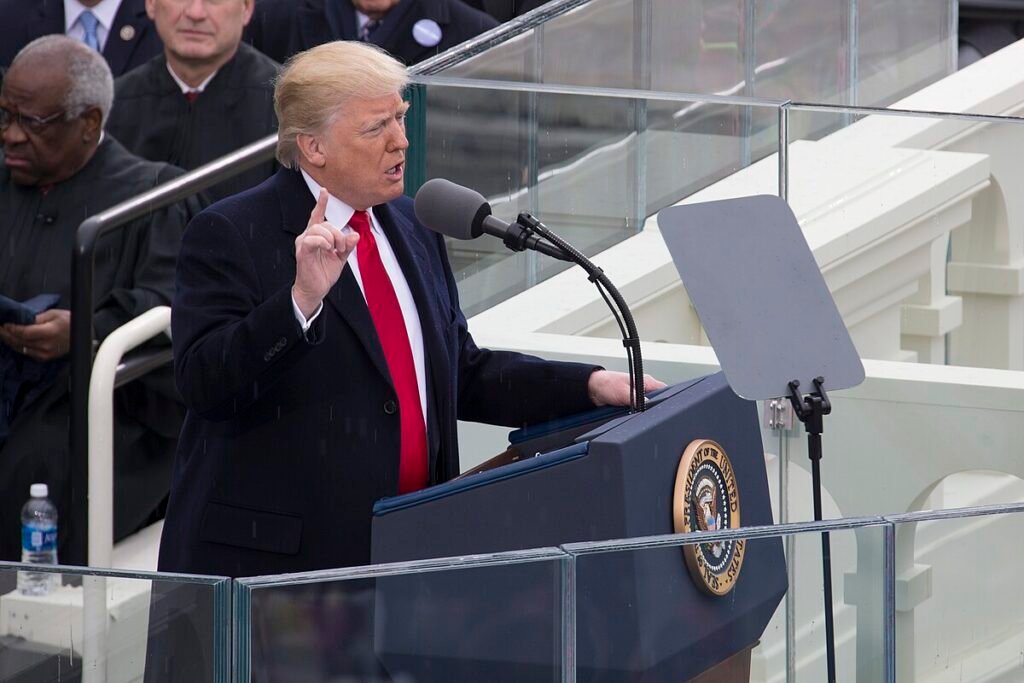
US President Donald Trump, on Saturday, November 29, 2025, issued an order via a post on the social media platform Truth Social that the airspace over and surrounding Venezuela should be considered “closed in its entirety”. President Trump announced this directive in a message targeting commercial airlines, pilots, drug dealers, and human traffickers, sharply increasing Washington’s pressure on the government of Venezuelan leader Nicolas Maduro. However, the President’s order was not immediately supported by an official or operational confirmation from either the US Federal Aviation Administration (FAA) or the Department of Defense; Venezuelan authorities also did not immediately respond to requests for comment.
This presidential declaration is evaluated as an action that bypasses traditional civil aviation protocols. According to international law, full and exclusive sovereignty over a state’s airspace belongs to that state; therefore, the US unilateral closure decision is interpreted not as a legal regulation but as a political expression of the military risk and the threat of potential kinetic intervention in the region. This situation creates an implied threat, meaning any aircraft that fails to comply with the airspace order faces the risk of being intercepted by US military assets.
This airspace order was the final step in an intense pressure campaign that the US had been conducting for months and which accelerated in November. Already on November 21, 2025, the US Federal Aviation Administration (FAA) had issued a security NOTAM (Notice to Air Missions) for Venezuela’s Maiquetía Flight Information Region (SVZM FIR) due to a “worsening security situation” and “heightened military activity”. This technical warning also cited Global Navigation Satellite System (GNSS) interference in the region, which could affect navigation and communication systems up to 250 nautical miles away. The FAA’s warning had already caused numerous international airlines, such as Iberia from Spain, TAP Air Portugal from Portugal, and Avianca from Colombia, to suspend flights to Caracas.
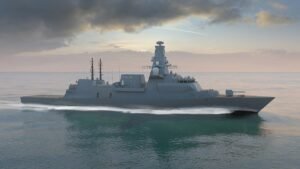
The seriousness of the President’s airspace order is underpinned by the largest military buildup in the last three decades, including the USS Gerald R. Ford Carrier Strike Group, which the US deployed to the Caribbean a week earlier. Days before the airspace order, after actions against drug vessels at sea, Trump had stated that the US Armed Forces would begin “very soon” land operations to stop drug trafficking networks. Since September, US forces had carried out more than 20 attacks against alleged drug trafficking vessels, resulting in the loss of more than 80 lives, demonstrating the kinetic capability of their threats.
The legal foundation for this military and rhetorical escalation was also laid earlier this month. The US State Department formally declared the “Cartel de los Soles” which Washington claims is led by Maduro and top regime officials, as a Foreign Terrorist Organization (FTO). This move, while providing the administration with expanded powers to target regime assets and broaden sanctions, is seen as an attempt to legitimize military actions internationally under the umbrella of counterterrorism. Venezuela, opposing these decisions, accused the US of violating its sovereignty and had called for an emergency meeting of the United Nations Security Council in October to protest the military strikes. The President’s airspace closure order has compelled the aviation sector, even in the absence of a legal closure, to reevaluate the region as an operationally high risk environment in light of the military buildup in the Caribbean. This situation has been recorded as a strategic maneuver pushing the region to the brink of military conflict, even as diplomatic efforts persist.