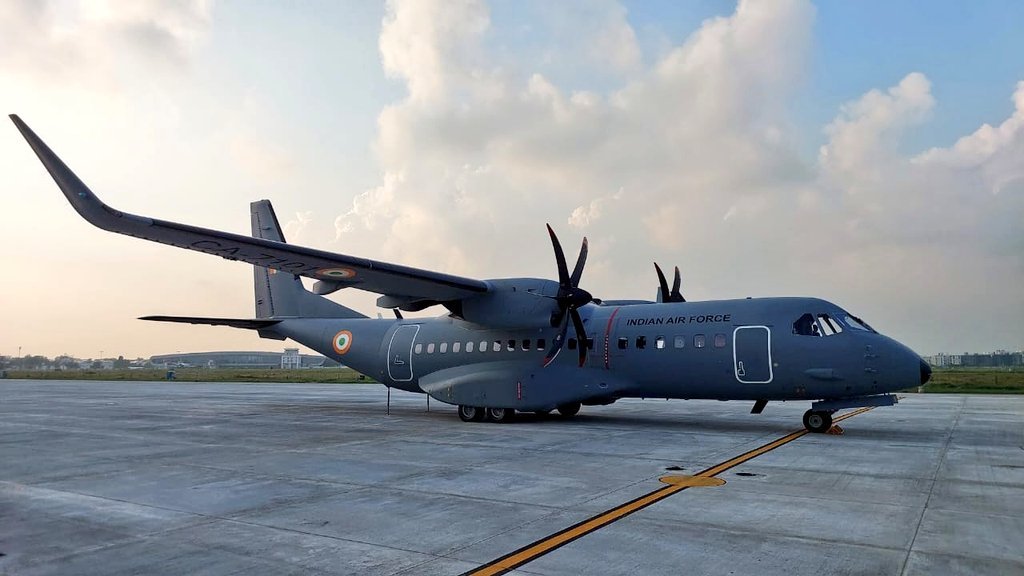
Spain’s first C295 from its new fleet completed a successful maiden flight over Seville, marking a key milestone in the program. The aircraft carried out flight control and system checks during this initial sortie. These tests now clear the way for mission system trials. Airbus will conduct further flight and ground evaluations before the aircraft enters service in 2026.
The contract, signed in December 2023, covers 16 C295s: eight MSA and eight MPA variants. The deal is worth €1.7 billion and includes simulators, training systems, and logistics support. Spain will begin receiving the aircraft in 2026, with deliveries continuing through 2031.
The aircraft that flew in Seville is the first of eight C295 MSA platforms ordered for maritime surveillance, reconnaissance, and search-and-rescue duties. These aircraft will replace the long-serving CN-235 VIGMA fleet and will strengthen Spain’s ability to counter smuggling, drug trafficking, and other maritime security threats. The MPA variant will carry advanced sensors, anti-submarine warfare capabilities, and integrated weapons for more demanding patrol missions.
The Airbus C295 has a long record in tactical transport and multi-mission roles. It carries up to 70 troops or 8 tons of cargo and cruises at 260 knots. The aircraft also operates from short, soft, or unprepared runways, giving operators strong flexibility in remote or austere environments.
Two Pratt & Whitney Canada PW127G turboprop engines power the C295. These engines offer high manoeuvrability and fuel efficiency, giving the aircraft up to 13 hours of endurance. The engine family has flown on more than 6,000 aircraft and logged over 160 million flight hours.
The modern C295 configuration features winglets that improve takeoff performance, raise cruising altitude, extend endurance, and reduce fuel burn by three to six percent. These advantages become especially important at hot-and-high airfields. The aircraft’s 12.69-meter pressurized cabin supports operations up to 30,000 feet and maintains strong handling at low altitudes.
C295 operators worldwide have accumulated more than 600,000 flight hours, showing the reliability and robustness of the platform. The successful first flight of Spain’s initial C295 MSA highlights the progress of the program and signals a major enhancement in Spain’s maritime surveillance and search-and-rescue capabilities in the years ahead.