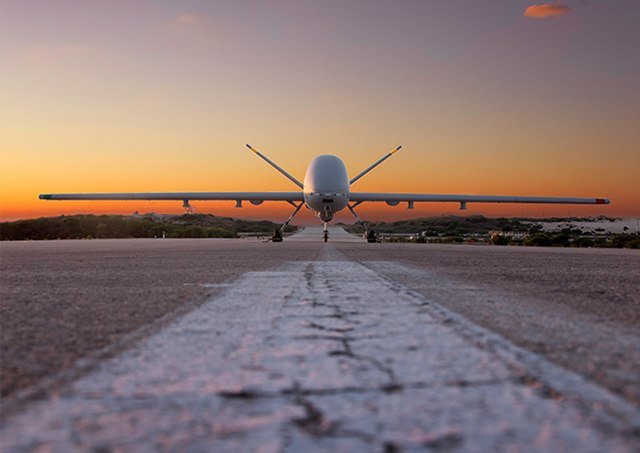
As part of its SAF2040 transformation, Singapore has decided to replace the nearly twenty-year-old Hermes 450 with the Hermes 900 (H900) Unmanned Aerial Vehicle (UAV). The Republic of Singapore Air Force announced the development on its official Facebook page. The SAF assessed the H900 as the system that best meets its operational needs. Singapore will join other countries using the H900 for both military and civilian purposes.
Elbit Systems welcomed Singapore’s selection of the Hermes 900. The company highlighted that the UAV’s 36-hour endurance and multi-role capabilities allow it to perform demanding missions, including persistent surveillance and precision strikes. Singapore now joins over 20 countries operating the Hermes 900 across four continents.
Advanced Capabilities and Features
The Hermes 900 is a next-generation MALE-class UAV with high autonomy and multi-role capabilities. It carries advanced sensors that detect land and maritime targets across a wide spectral range. The UAV can carry multiple payloads simultaneously and leverages mature subsystems from the Hermes family to maintain high safety, reliability, and airworthiness standards.
The platform has a takeoff weight of 1,180 kilograms and a maximum payload of 350 kilograms. It operates over long ranges through satellite communication and line-of-sight data links. Designed to withstand adverse weather, the H900 requires minimal maintenance, can stay airborne for up to 36 hours, and reaches a service ceiling of 30,000 feet, making it ideal for long-duration ISTAR missions.
The UAV supports a wide range of payloads, including EO/IR sensors, laser designators, SAR/GMTI radars, maritime patrol radars, AIS, ELINT, EW, COMINT, COMJAM, wide-area surveillance and mapping solutions, and hyperspectral sensors. The system can also be delivered in different configurations to meet specific operational needs.