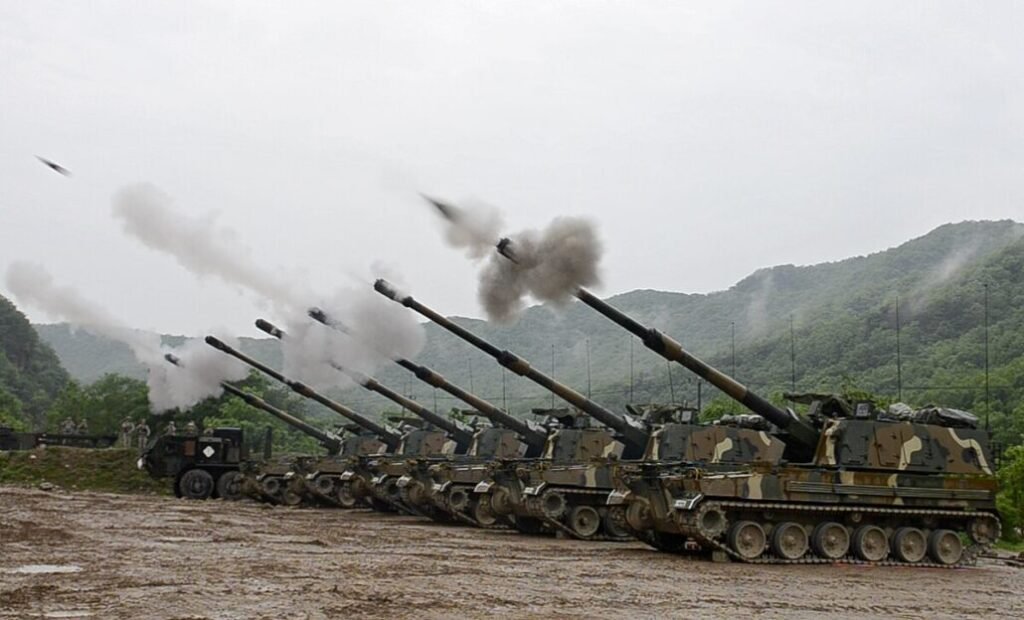
Poland has crossed another critical threshold in its massive military modernisation programme with South Korea, significantly strengthening its artillery capabilities. Deputy Prime Minister and Minister of National Defence Władysław Kosiniak Kamysz announced on Sunday, 16 November, through a social media statement, that the fifth shipment of 155 millimetre K9A1 Thunder self propelled howitzers delivered from the Republic of Korea this year had officially arrived. This delivery marks an important milestone by raising the total number of K9 systems in the Polish Armed Forces inventory to more than two hundred.
This latest shipment, produced by Hanwha Aerospace, consisted of twenty one K9 howitzers. Minister Kosiniak Kamysz stated that another equipment delivery for the Polish Army had taken place that week and noted that twenty one K9 howitzers had reached the Sixteenth Mechanised Division and the Missile and Artillery Training Centre in Toruń. He added that Poland now possessed more than two hundred K9 self propelled howitzers and that more units would soon join the equipment of Polish formations. This rapid delivery pace is widely regarded as concrete evidence of Warsaw’s strategy to build a fast and large scale conventional deterrent in response to the regional security threat that emerged after Russia’s 2022 invasion of Ukraine. These acquisitions also aim to compensate for the substantial amount of Polish equipment transferred to the Ukrainian military while enabling the creation of a modern artillery network that can meet the demands of high intensity conflict on NATO’s eastern flank.
The strategic distribution of the new howitzers aims to reinforce both operational deterrence and training capacity. A significant portion of the twenty one howitzers has been assigned to the Sixteenth Mechanised Division, which operates in a geographically sensitive area near the border of Russia’s Kaliningrad Oblast. The remaining systems have been directed to the national training centre in Toruń, highlighting the need to accelerate personnel training, which is a key logistical challenge associated with the rapid flow of equipment. Previous K9 deliveries were also allocated to other key units such as the First Armoured Brigade of the Eighteenth Mechanised Division as part of Warsaw’s systematic effort to modernise the artillery component of its expanding mechanised forces.
The K9A1 Thunder platform weighs forty seven metric tons, is powered by a one thousand horsepower diesel engine, and is equipped with a fifty two calibre 155 millimetre gun. These features give it the ability to conduct precision fire beyond forty kilometres and to perform rapid shoot and scoot manoeuvres that are essential in modern warfare. All K9 systems delivered from South Korea are equipped with the Polish made TOPAZ integrated fire control system and the FONET internal communication systems, ensuring full and immediate compatibility with Polish and NATO command structures. This localisation allows the platforms to function as effective networked nodes from the first day of service.
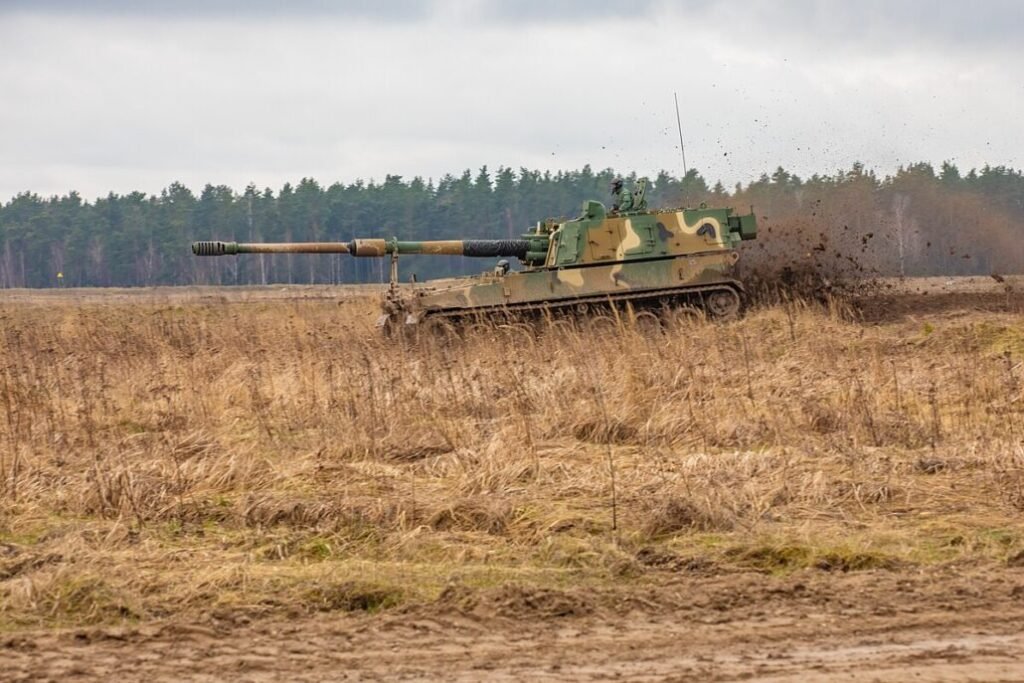
The technological partnership between the Polish AHS Krab howitzer system and the K9 platform forms another major advantage of this rapid acquisition effort. The Krab uses a modified version of the K9 chassis, produced under licence in Poland since 2014. This deliberate alignment greatly standardises logistics and maintenance processes for both major artillery programmes, easing long term operational readiness.
The scope of the K9 procurement is defined by two main execution contracts signed with Hanwha Aerospace. The first contract, signed in August 2022 and valued at two point four billion dollars, covers the delivery of two hundred twelve K9A1 systems by 2026. With more than two hundred units delivered by November 2025, the contract is almost fully completed ahead of schedule, demonstrating the exceptional ability of the South Korean defence industry to deliver complex platforms rapidly and at scale. A second execution contract valued at two point six billion dollars was signed in December 2023. It secures an additional one hundred fifty two howitzers consisting of six K9A1 units and one hundred forty six K9PL units customised for Polish requirements, to be delivered between 2025 and 2027. This two stage approach separates immediate capacity expansion from the more complex process of technology transfer and localisation, reducing industrial risk.
In the long term, Poland seeks to transform rapid procurement into a sustainable domestic industrial capability. The framework agreements outline a goal of acquiring up to six hundred seventy two K9 howitzers in total, with four hundred sixty K9PL units to be manufactured in Poland after 2026. The second contract includes not only the delivery of equipment and ammunition but also the technology transfer and technical support required to enable the Polish defence industry to perform maintenance, overhaul and modernisation activities. Poland has used the enormous scale of these purchases, which exceed five billion dollars across the two contracts, to secure technology transfer and industrial offset agreements aimed at modernising its defence industrial base.
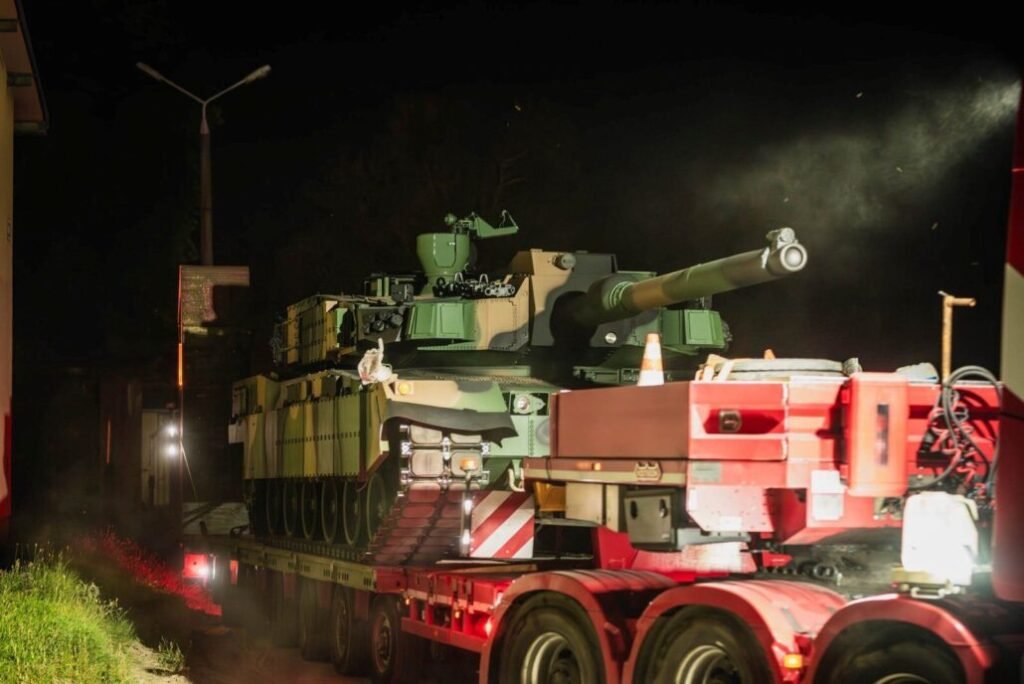
The K9 programme is only one part of Poland’s broader and multi dimensional defence cooperation with South Korea. Warsaw has also received one hundred sixty of the first one hundred eighty K2 Black Panther main battle tanks ordered. Poland continues to acquire the K239 Chunmoo multiple launch rocket system integrated on Polish Jelcz truck chassis and the FA 50 light combat aircraft, twelve of which have been delivered. This extensive collaboration, exceeding sixteen point six billion dollars in total value, strengthens Poland’s commitment to becoming a key strategic anchor on NATO’s eastern flank and opens a gateway to the European market for the South Korean defence industry.