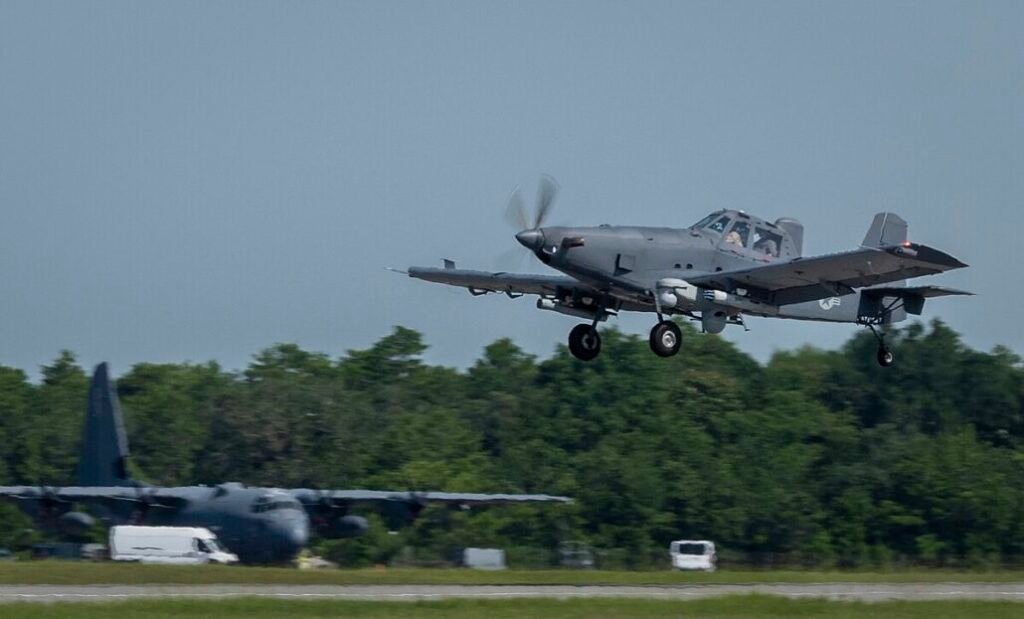
The single-engine OA-1K Skyraider II attack aircraft, newly inducted into the U.S. Air Force Special Operations Command (AFSOC) inventory, crashed last Thursday afternoon (October 23, 2025) during a routine training flight in the southeastern section of Oklahoma City. An official statement released by the Oklahoma National Guard confirmed that the mishap occurred near SE 119th Street and S Sooner Road.
The most critical and positive outcome of the incident was that the two crew members—a civilian contract flight instructor and a U.S. Air Force active-duty pilot—miraculously walked away without injury. The official confirmation explicitly stated that “no injuries were reported.”
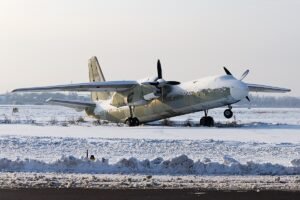
The aircraft, which operates out of Will Rogers Air National Guard Base (ANGB) and is assigned to the 492nd Special Operations Wing (SOW) , struck civilian infrastructure as it descended during the training mission. The OA-1K hit two power poles and a road sign during its emergency landing, bringing down electrical lines and sparking a small grass fire. Although the aircraft came to rest on its wheels in a city field, it sustained “significant damage.” First responders were immediately dispatched to the scene to secure the area.
While the official cause of the crash has not yet been announced, the Oklahoma Air National Guard confirmed the investigation is ongoing. The Accident Investigation Board (AIB) report, led by the Air Force, is expected to be released within 60 to 90 days. Unofficial reports circulating in the aviation community suggest the potential cause may stem from an engine failure, specifically alleging the aircraft displayed a critical engine warning (“chip light”) the day before the incident, but was cleared for flight after maintenance. If substantiated, the focus of the investigation would shift from technical failure to systemic flaws in maintenance protocols.
The OA-1K Skyraider II, commercially known as the AT-802U Sky Warden, is a light attack and armed Intelligence, Surveillance, and Reconnaissance (ISR) aircraft developed under the U.S. Special Operations Command’s “Armed Overwatch” program. Essentially, this platform is a heavily militarized version of a proven agricultural crop duster, equipped with heavy weaponry for military roles. Powered by a single turboprop engine, this structure offers the advantages of low cost and simple maintenance, but a total engine failure requires the crew to execute an immediate forced landing, emphasizing the inherent risk of its single-engine design. The aircraft is the only tactical platform in the U.S. Air Force inventory with a conventional “taildragger” landing gear configuration. While advantageous for austere operations, this configuration demands high pilot skill in emergencies. Since the platform lacks ejection seats, survivability is entirely dependent on the aircraft’s rugged structure and the crew’s ability to execute a controlled impact. The crew’s successful survival validated the highly specialized training conducted at Will Rogers ANGB. This mishap poses an operational setback for the AFSOC program, which is already under scrutiny due to budgetary constraints.