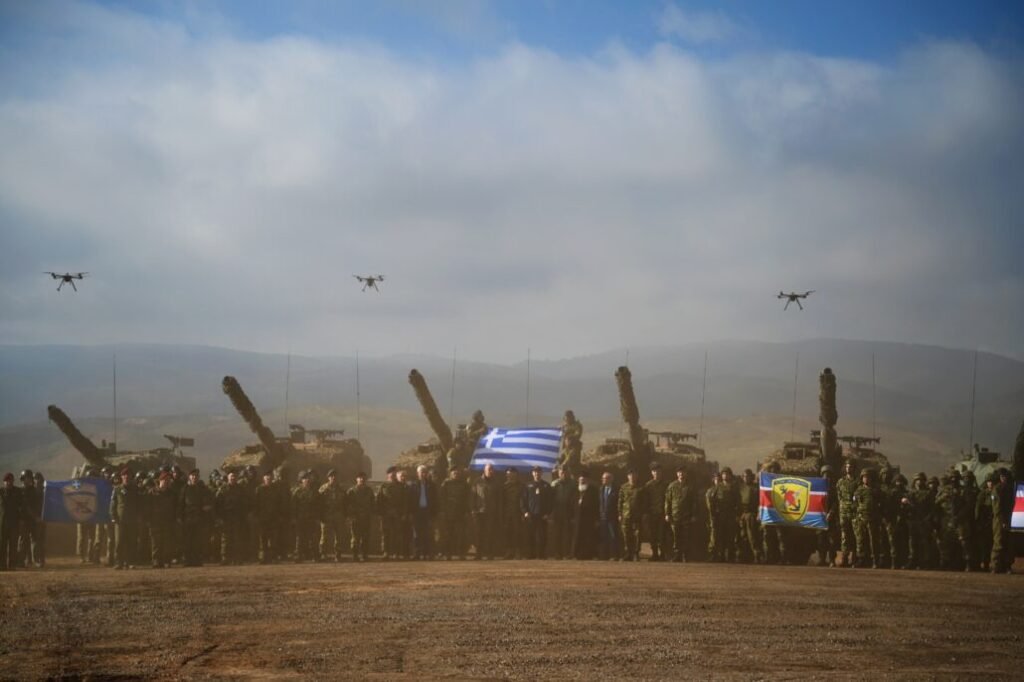
The Hellenic National Defence General Staff (GEETHA) announced that “Double‑Headed Eagle ’25” (ΔΙΚΕΦΑΛΟΣ ΑΕΤΟΣ‑25), a national military exercise that lasted two weeks and subjected the country’s strategic air defence systems to an intensive test, was successfully completed. The exercise began on 2 November and ended on 14 November 2025, with all activities conducted at the Crete Firing Range (PVK), Greece’s primary facility designated for long‑range weapons testing. This activity aimed to validate the critical operational readiness state of the Hellenic Integrated Air Defence System (HIADS), thereby formally consolidating the country’s regional deterrence capacity.
The General Staff described this activity as a small‑scale Tactical Allied Military Exercise (TAMS), a classification indicating a focus on technical performance and an evaluation of the effectiveness of strategic anti‑aircraft weapon systems under combat conditions. The technical scope of the exercise included the certification of all anti‑aircraft weapon systems in the army’s inventory, and in particular, the operational competencies of the Air Control System Units and the Missile Control Centre responsible for managing Command and Control (C2) processes were meticulously examined. The Joint Air Defence Command (GEETHA/DEA) successfully coordinated the entire programme, thereby demonstrating that this integrated command structure ensures uninterrupted communication and resource allocation in high‑intensity defence scenarios.
Moreover, during the exercise, alongside tactical firings conducted against remotely‑piloted aerial targets, personnel and assets from the three General Staffs of the Hellenic Armed Forces executed several complex scenarios simultaneously. This joint participation confirmed that a high level of joint execution was achieved among the Army, Navy and Air Force, enabling the forces to practise the complex coordination protocols required within the restricted airspace of the Aegean Sea. The use of the range in Crete for long‑range systems underscored the country’s commitment to regional security by demonstrating to the outside world the effectiveness of its strategic missile defence assets.
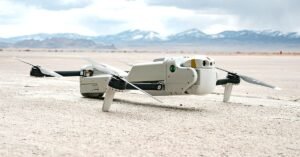
Additionally, the completion of the exercise coincided with statements by Defence Minister Nikos Dendias that formally reaffirmed his commitment to integrating Unmanned Aerial Systems (UAS) and Counter‑UAS (C‑UAS) technologies into the defence doctrine. Minister Dendias stated that UAS and counter‑UAS systems have now become an organic element of the operational capabilities of the Hellenic Armed Forces, marking the transition to the 21st‑century operational environment. This modernization step is based on cooperation with the domestic defence ecosystem, and in this context, units tested innovative tactics such as target neutralization using FPV drones in parallel exercises like “Aisios Oionos‑25.”
Furthermore, this strategic transformation is supported infrastructurally by the establishment of the 306th Telecommunications Base Factory, which provides the Armed Forces with the capability to manufacture their own unmanned vehicles. The factory is complemented by mobile facilities capable of following combat units, allowing immediate on‑site production of additional drones for combat units and thereby increasing logistical flexibility. As a result, the “Double‑Headed Eagle ’25” exercise both ensured the high‑standard certification of the country’s current air defence architecture and confirmed Greece’s plan to systematically transform its defence capabilities through UAS/C‑UAS technologies.