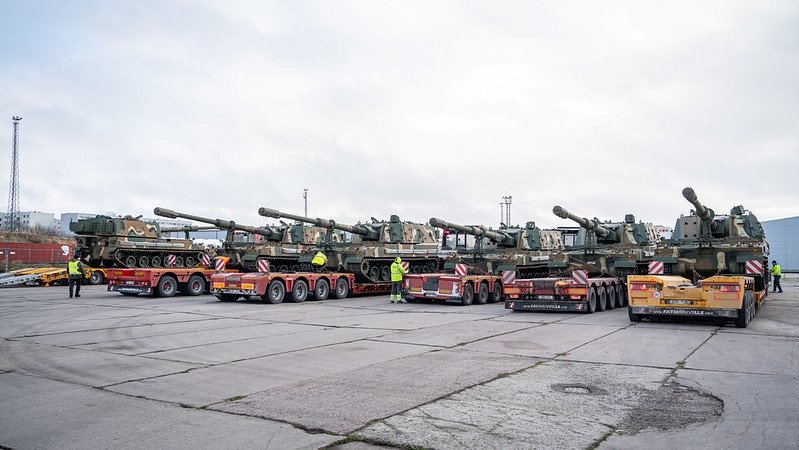
At a critical juncture where the security architecture in Eastern Europe is being reshaped, Estonia has surpassed a significant threshold in the modernization of its artillery which forms the backbone of its land defense doctrine. The Estonian Centre for Defence Investments officially announced the receipt of six K9 Thunder 155mm mobile howitzer systems that arrived at the port of Paldiski on November 24, 2025. This shipment constitutes the first actual delivery of the procurement contract signed with Hanwha Aerospace in January 2023 which is valued at approximately 36 million Euros. With this latest delivery the number of active K9 units in the inventory of the Estonian Defence Forces has risen to 30. This development indicates that the country is approaching its goal of a fully operational artillery regiment consisting of 36 units by 2026 ahead of schedule.
Cost Effectiveness and the Necessity of Mass
Estonian defense planning is built upon the lesson learned from the war in Ukraine that volume is just as important as precision. The most striking detail in this context is the cost effectiveness of the procurement model. While the international market value of a factory new K9 system hovers in the band of 8 to 10 million dollars Estonia has achieved maximum firepower with a limited defense budget by acquiring slightly used hulls from South Korean army stocks and modernizing them for a unit cost of approximately 3 million Euros. This strategy has allowed Estonia to create the armored artillery mass requisite to counter a quantitatively superior adversary.
Technical Depth: Terrain Dominance and Firepower
The platforms unloaded at the port possess a high engineering infrastructure optimized for the challenging geographical conditions of Estonia such as forests peat bogs and dense snow. The K9 Thunder with a combat weight of 47 tons draws its power from an 8 cylinder MTU MT881 Ka 500 water cooled diesel engine generating 1,000 horsepower. Supported by an Allison X1100 5A3 automatic transmission this power group provides the vehicle with a power to weight ratio of 21 horsepower per ton allowing it to reach speeds of 67 km/h. However the truly critical element for Baltic defense is the hydropneumatic suspension system of the vehicle. This system absorbs the recoil generated during firing while providing the stability vital for the application of shoot and scoot tactics in rugged terrain.
In terms of firepower the system is equipped with a 155mm 52 caliber barrel manufactured by Hyundai WIA. The K9 can reach a range of 30 kilometers with standard high explosive ammunition and can hit targets over 40 kilometers away with precision when using rocket assisted or base bleed ammunition. The most deterrent feature of the system is its Multiple Round Simultaneous Impact capability. This ability allows three shells fired at different angles to land on the target at the same time creating a maximum shock effect before enemy elements have the opportunity to take cover.
Local Integration: The K9EST Kõu Transformation
Although the raw performance of these South Korean origin platforms is impressive the vehicles are subjected to local industrial integration rather than being sent directly to the front line in accordance with the requirements of the Estonian Defence Forces. Hulls shipped to the facilities of the Estonian defense industry firm GoCraft undergo a comprehensive process known as Estonianization to be converted into the K9EST Kõu variant.
This modernization process covers not only painting the vehicle but also replacing its electronic brain. Original communication systems are removed and replaced with encrypted digital radios that meet NATO standards and fire control computers integrated into the national fire support network of Estonia. Furthermore additional insulation and heating systems are added to the engine and crew compartments to ensure operational continuity at temperatures of minus 30 degrees Celsius and below while special storage areas are mounted for the personal equipment of the soldiers.
Doctrinal Transformation: From Battalion to Regiment
The increase of the number of vehicles in the inventory to 30 has brought about a radical change in the organizational structure of the Estonian army. Artillery elements which were previously organized as a battalion at the brigade level have been centralized under the Artillery Regiment of the Estonian Division with the increase in numbers and capacity. This new regimental structure based at the Tapa base allows artillery batteries to be spread over a wider front line and enables the division command to focus fire support on the most critical points of the battlefield.
This structuring completes the Layered Firepower concept together with other systems delivered in 2025. While armored K9s suppress tactical targets on the contact line wheeled CAESAR howitzers also entered into the inventory in 2025 fill the gaps with their strategic mobility and HIMARS rocket systems are configured to destroy high value targets such as command centers and logistics nodes at operational depth.
Logistical Sustainability and Future Vision
Estonia has not only acquired weapon systems but has also taken industrial steps to guarantee the long term maintenance of these systems. The framework agreement worth 50 million Euros signed with the Norwegian technology giant Kongsberg Defence & Aerospace has secured the maintenance repair and spare part supply of the K9 fleet on a regional basis. The fact that Finland Norway and Poland utilize the same system creates a common logistics pool on the Baltic Scandinavian line ensuring supply security in the event of a crisis. According to the program schedule the final six vehicles of the January 2023 contract will be delivered in 2026 and Estonia will become one of the armies with the densest firepower on the Eastern Flank of NATO with a modern digital and fully armored artillery fleet totaling 36 units.