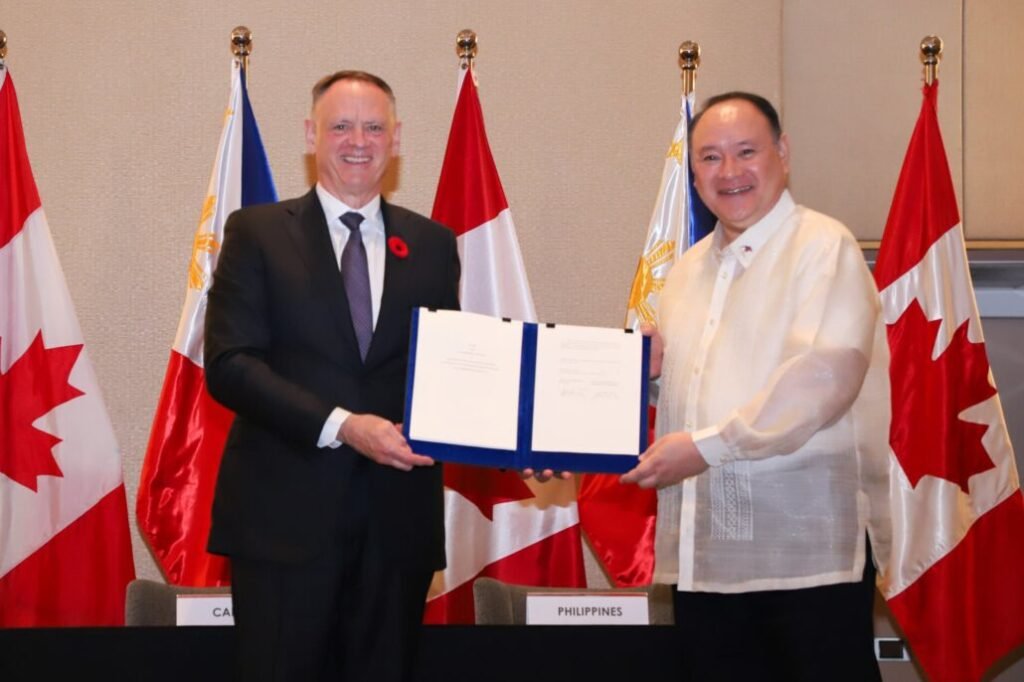
Canada and the Philippines have strengthened their defense partnership by signing a Status of Visiting Forces Agreement (SOVFA), marking a new chapter in bilateral cooperation amid rising regional security challenges. The agreement was signed on November 2, 2025, in Manila and Makati City by Canadian Minister of National Defence David McGuinty and Philippine Secretary of National Defense Gilberto Teodoro.
Building on the Canada–Philippines Defence Cooperation Memorandum of Understanding signed in January 2024, the SOVFA provides a legal framework for joint and multinational operations, training, and exercises on each other’s territory. It is designed to enhance interoperability and logistical cooperation between the Armed Forces of the Philippines (AFP) and the Canadian Armed Forces (CAF), paving the way for deeper defense engagement and capacity-building.
The agreement highlights the Philippines as Canada’s first SOVFA partner in the Indo-Pacific region, representing a significant milestone in the two nations’ growing defense partnership. Both sides emphasized that the agreement is grounded in mutual respect, strategic trust, and support for a rules-based international order.
Minister McGuinty’s visit marked the first official trip by a Canadian Defense Minister to the Philippines. He underscored Canada’s commitment to the Philippines’ important role in Southeast Asia and to deepening defense and security cooperation for regional stability and shared prosperity. Secretary Teodoro noted that strengthening ties with like-minded nations such as Canada aligns with the Philippines’ strategy to enhance peace, stability, and national resilience.
The SOVFA follows previous agreements signed by the Philippines with the United States (1998), Australia (2007), Japan (2024), and New Zealand (April 2025), making it the fifth of its kind. The signing also came after the recent Multilateral Maritime Cooperative Activity (MMCA) in the West Philippine Sea, which involved the Philippines, the US, Australia, and, for the first time, New Zealand.
Canada continues to position itself as an active and reliable Indo-Pacific partner, highlighting the region’s critical importance to global security, economic prosperity, democratic values, and the rule of law. The Philippines views the agreement as a strategic step to reinforce national resilience and contribute to regional stability.