
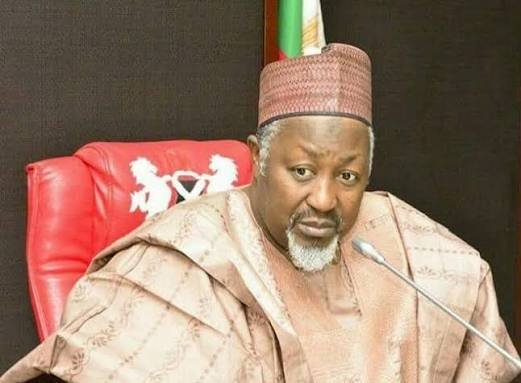
The resignation of Nigeria’s Minister of Defence, Mohammed Badaru Abubakar, on December 1, 2025, represents a pivotal moment in the country’s ongoing security crisis. Officially attributed to health reasons, the timing of his departure coincided with a period of heightened security challenges and President Bola Tinubu’s declaration of a national security emergency. Analysts suggest that the leadership change was politically managed, reflecting mounting public and media criticism over perceived strategic shortcomings and the Minister’s controversial remarks on technological gaps in counter-banditry operations.
The security threat in Nigeria has become increasingly concentrated in the North-Western and North-Central regions, where armed banditry has evolved into a complex, multi-layered criminal enterprise. This network is sustained by illicit financial flows—including over N2.2 trillion in annual ransom payments—and is closely linked to illegal gold mining and transnational supply chains spanning the Sahel and beyond. The resulting disruption has devastated local economies, displaced hundreds of thousands, and forced the closure of schools, undermining both state legitimacy and human capital development.
Crucially, these armed groups are increasingly collaborating with or emulating terrorist organizations. Shared training camps, supply routes, and smuggling networks with groups such as Boko Haram and ISWAP have transformed what was once localized criminality into a threat with significant strategic implications. This convergence has intensified the challenge to Nigeria’s anti-terrorism efforts, signaling the need for a comprehensive and adaptive security strategy.
According to the Armed Conflict Location and Event Project (ACLED), banditry alone caused at least 2,600 civilian deaths in 2021, creating hundreds of thousands of internally displaced persons (IDPs). More than 200,000 have been displaced domestically, while roughly 60,000 fled to Niger, highlighting the regional dimensions of the crisis.
During his tenure, Minister Badaru championed an integrated security approach, combining military action with community engagement, particularly in the North-West. He advocated for the creation of a dedicated North West Theatre Command to improve operational coordination and protect vulnerable communities. Recognizing the transnational nature of the threat, he also called for a unified West African response, including the activation of the ECOWAS Standby Force, emphasizing the intrinsic link between Nigeria’s stability and regional security.
The Ministry under Badaru also prioritized enhancing military capabilities. This included the induction of new air platforms such as the T129 Attack Helicopter, designed to bolster the Nigerian Air Force’s operational effectiveness. In late 2024, he visited operational sectors to urge intensified air operations, echoing the President’s confidence in the military’s ability to suppress banditry.
Despite these initiatives, systemic weaknesses within the defense establishment persisted, and the worsening security landscape exposed limitations in strategy and execution. With the government expected to announce a new Minister of Defence imminently, the incoming leader faces urgent tasks: shifting from conventional approaches to an intelligence-driven model, operationalizing the North West Theatre Command, disrupting the financial networks sustaining bandit groups, and deploying specialized Intelligence, Surveillance, and Reconnaissance (ISR) technology for precision operations. Without decisive and technically capable leadership, Nigeria risks strategic drift at a moment when its security architecture is under comprehensive review.